


The Renaissance of the 15-Minute City: Why Proximity is the New Luxury
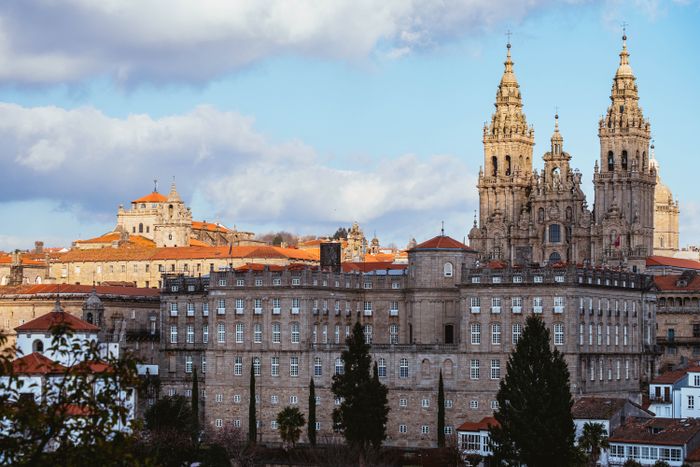
The Great Urban Shift For the better part of the 20th century, the "ideal" city was defined by its grand scale and its segregation of functions. Inspired by the modernist movement and the rise of the automobile, urban planners designed cities with distinct zones: gleaming central business districts (CBDs) for work, sprawling residential suburbs for living, and massive industrial parks for production. Connecting these dots were multi-lane highways and labyrinthine transit systems. Success was measured by how far and how fast one could commute. However, as we move through 2026, the cracks in this high-speed, high-sprawl model have become impossible to ignore. Long commutes have become the leading cause of urban stress; social isolation has spiked in "residential deserts"; and the carbon footprint of car-dependent logistics has reached a breaking point. A quiet revolution is underway—a return to a more human-centric scale known as the 15-Minute City. This concept is no longer just a niche planning theory; it is the gold standard for global livability. Defining the 15-Minute Framework At its core, the 15-Minute City is a radical reimagining of urban density and diversity. Developed significantly by Professor Carlos Moreno at the Sorbonne, the premise is deceptively simple: every resident should be able to access their essential human needs—work, groceries, education, healthcare, and green spaces—within a 15-minute walk or bike ride from their front door. But the 15-Minute City is not just about short distances; it is about "chronotopia," or the better use of time and space. It challenges the idea that a building should only have one purpose. In this model, a schoolyard might become a local park on weekends; a cafe might serve as a co-working space during the day and a community workshop at night. By decentralizing services, we eliminate the need for the "forced mobility" that defines most modern lives. In 2026, the ultimate luxury isn't a faster car; it's the ability to never need one. The Science of Proximity: Why It Matters Why does the 15-minute radius have such a profound impact on our Global Livability Index? The reasons are multifaceted, spanning environmental, psychological, and economic domains. 1. The Psychological Liberation Studies in environmental psychology consistently show that long commutes are negatively correlated with subjective well-being. The unpredictability of traffic and the sensory overload of transit hubs trigger elevated cortisol levels. In contrast, "active transport"—walking or cycling through a neighborhood—provides a cognitive "buffer" between home and work. It encourages mindfulness and physical movement, which are foundational to mental health. When your environment is navigable on a human scale, the city stops being a source of stress and starts being a source of vitality. 2. Environmental Resilience Urban sprawl is one of the primary drivers of carbon emissions. By reducing the reliance on internal combustion engines for short-order errands, 15-minute cities drastically lower their local emissions and noise pollution. Furthermore, this model encourages "green fingers"—small, hyper-local parks and vertical gardens—which help mitigate the urban heat island effect. A livable city in the 21st century must be a breathable city. 3. Social Cohesion and the "Third Space" In a segregated city, we often only interact with people who share our socio-economic background. The 15-minute model fosters "social friction." When you walk to the local bakery or sit in a neighborhood square, you encounter a diverse cross-section of your community. These interactions build social capital and reduce the epidemic of urban loneliness. The neighborhood becomes a "village within the metropolis," providing a sense of belonging that high-rise isolation often destroys. Global Case Studies: From Theory to Asphalt Several cities in our index are already leading the way, proving that this transformation is possible even in established metropolises. - Paris: The Pioneer. Under Mayor Anne Hidalgo, Paris has undergone a dramatic "de-paving" process. The banks of the Seine, once a highway, are now public beaches and parks. Through the "Big Jump" initiative, cycling infrastructure has been woven into the historic fabric of the city, making the 15-minute dream a reality for millions of Parisians. - Barcelona: The Superblocks. Barcelona's Superilles (Superblocks) are perhaps the most famous example of reclaiming the streets. By diverting through-traffic around nine-block grids, the city has created internal "oases" where children can play and neighbors can congregate. The result? A measurable increase in local business revenue and a significant drop in nitrogen dioxide levels. - Melbourne: The 20-Minute Neighborhood. Taking a slightly more expansive view, Melbourne has integrated "20-minute neighborhoods" into its long-term planning strategy. Their focus is on ensuring that high-quality public transport is the backbone of these local hubs, proving that proximity and global connectivity can go hand-in-hand. The Challenges: Equity and the Gentrification Trap As a product manager, you understand that every "feature" has its bugs. The 15-Minute City is not without its critics. The primary concern is equity. If only certain neighborhoods are transformed into walkable paradises, property values in those areas skyrocket, leading to the displacement of lower-income residents. To be truly livable, the 15-minute model must be applied universally, not just in historic or wealthy centers. It requires "social mixing" policies and the decentralization of high-quality jobs into the suburbs. A city is only as livable as its most neglected neighborhood. The Digital Nomad Perspective For the growing demographic of remote workers and digital nomads, the 15-minute city is the "Golden Ticket." When your office is wherever your laptop is, the quality of your immediate surroundings becomes your primary KPI. Nomads are increasingly flocking to cities like Lisbon, Mexico City, and Taipei—not just for the low cost of living, but because these cities offer a "walkable density" that allows for a seamless integration of work and life. If your gym, your specialty coffee shop, your grocery store, and your community hub are all within a 500-meter radius, your "deep work" phases become more productive, and your "recharge" phases become more restorative. Conclusion: Reclaiming the Human Scale As we analyze the data for our Global Livability Index, a clear trend emerges: the world's most resilient cities are those that have stopped trying to be machines and started trying to be ecosystems. The 15-Minute City is not a regressive move toward the past; it is a sophisticated, data-backed strategy for a sustainable future. It is about acknowledging that while technology allows us to connect globally, our biological and emotional needs are fundamentally local. By reclaiming our time and our streets, we aren't just making cities more efficient—we are making them more human.