


Beyond the Gates: Why Psychological Safety is the True Foundation of Urban Resilience
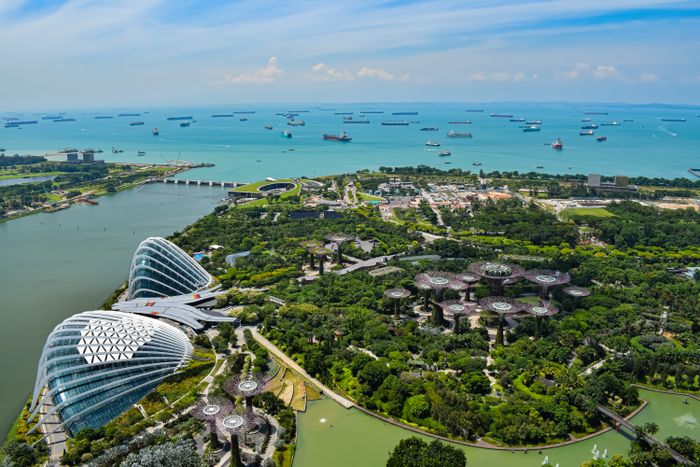
The Evolution of Urban Safety When we talk about "safety" in the context of a city, the mind typically jumps to statistics: crime rates, police presence, and emergency response times. In the traditional urban planning of the late 20th century, a safe city was often a "hardened" city—one filled with surveillance cameras, gated communities, and well-lit but sterile public squares. However, as we evaluate the top 50 hubs in our 2026 Global Livability Index, we find that the most resilient cities are moving away from this "fortress" mentality. In 2026, the definition of urban safety has evolved into something much deeper: Psychological Safety. This is the invisible feeling that a citizen can traverse any neighborhood at any hour, express their identity without fear, and rely on their neighbors during a crisis. It is the difference between a city that is merely "monitored" and a city that is truly "secure." The "Broken Windows" vs. "Open Windows" Philosophy For decades, urban policing was dominated by the "Broken Windows" theory—the idea that cracking down on minor aesthetic disturbances would prevent major crimes. While this led to cleaner streets, it often created a sense of friction and over-surveillance. The most livable cities today, such as Copenhagen, Tokyo, and Zurich, practice what urban sociologists call the "Open Windows" philosophy. These cities prioritize "passive surveillance" or "eyes on the street"—a concept pioneered by Jane Jacobs. By encouraging mixed-use zoning (where shops, cafes, and apartments coexist), these cities ensure that streets are never truly empty. When a street is filled with people dining, walking dogs, or commuting at various hours, the community itself becomes the security net. Safety in these cities isn't enforced by a camera; it is maintained by a vibrant, active society. The Psychology of the "Night-Time Economy" A key indicator of a city's safety is the health of its night-time economy. In many struggling metropolises, the city "dies" after 6:00 PM, leaving streets dark and intimidating. Conversely, cities that rank high in our index—like Seoul, Madrid, and Taipei—treat the night as a second life. By investing in 24-hour public transit, night markets, and late-night cultural hubs, these cities eliminate the "fear of the dark." When a young professional or a digital nomad knows that a clean, well-lit train is available at 2:00 AM, their sense of freedom expands. This mobility is a form of empowerment. Safety, in this context, is measured by the degree of autonomy a city grants its most vulnerable residents during the hours of darkness. Social Resilience: The Safety of the "Safety Net" True safety is also about Resilience—how a city handles the unexpected. Whether it's a natural disaster, an economic downturn, or a public health crisis, a livable city is one where the social fabric doesn't tear under pressure. 1. Trust in Institutions In cities like Helsinki and Vienna, there is a high level of institutional trust. Residents believe that the water is clean, the building codes are enforced, and the emergency services are impartial. This "structural safety" reduces the chronic background stress of urban life. You don't have to worry if the bridge you are crossing is maintained; the system takes care of it. 2. The Strength of "Weak Ties" Sociologists point out that the safest cities are those where people have strong "weak ties"—knowing the name of your local barista, recognizing the person who lives three doors down, or nodding to the regular at the park. These small social connections form an informal mutual aid network. In a crisis, these ties are what prevent a neighborhood from descending into chaos. The Economic Impact of a "Low-Fear" Environment From a Product Manager's perspective, safety is a massive economic multiplier. Fear is an "innovation killer." When people feel unsafe, they don't take risks. They don't start sidewalk businesses, they don't attend networking events in distant neighborhoods, and they spend less time (and money) in public spaces. Low-fear cities like Singapore and Munich attract global investment precisely because they offer Predictability. For a startup founder or a tech firm, a safe environment means lower insurance costs, higher employee retention, and a "frictionless" daily operation. When a city removes the mental burden of worrying about personal security, it frees up that cognitive energy for creativity and commerce. The Digital Nomad and the "Solo Traveler" Test The ultimate stress test for any city's safety is the "Solo Female Traveler" benchmark. In the digital nomad community, word-of-mouth travels fast. If a city is perceived as hostile or unsafe for solo women, it quickly loses its appeal as a remote work hub. Cities that have passed this test, such as Lisbon and Tokyo, have seen a massive influx of "knowledge workers." These individuals aren't just looking for fast Wi-Fi; they are looking for an environment where they can walk home from a co-working space at midnight without checking over their shoulder. In 2026, a city's reputation for safety is its most valuable marketing asset in the global "war for talent." Designing for Inclusion: Safety for All We must also acknowledge that safety is often experienced differently across various demographics. A city that is safe for a wealthy executive may not be safe for a marginalized community or an immigrant worker. A truly livable city practices Inclusive Security. This involves: - Infrastructure Design: Eliminating dark underpasses and creating wide, clear sightlines in public parks. - Community Policing: Ensuring that the police force reflects and understands the diversity of the neighborhoods they serve. - Digital Transparency: Using apps and open-data portals to keep citizens informed about local safety updates without resorting to fear-mongering. Conclusion: Safety as an Act of Freedom As we reflect on the safety pillar of our Global Livability Index, we realize that safety is not about the absence of crime, but the presence of freedom. A safe city is one that invites you to explore, to linger, and to connect. It is a city that protects your physical body while nurturing your mental peace. By moving away from the "fortress" model and toward a "community" model, the world's most livable cities are proving that the best security system ever invented is a group of neighbors who know and care for one another. In the end, we don't just want to live in a city that is safe; we want to live in a city that makes us feel at home.